
The price war is over, the safety war has begun. China’s electric bicycle charger industry is pivoting toward high-quality development as the New National Standard and mandatory 3C certification become the final word on market access. Currently, nearly 40 companies have cleared the first hurdle, signaling a move toward a more regulated and secure ecosystem.
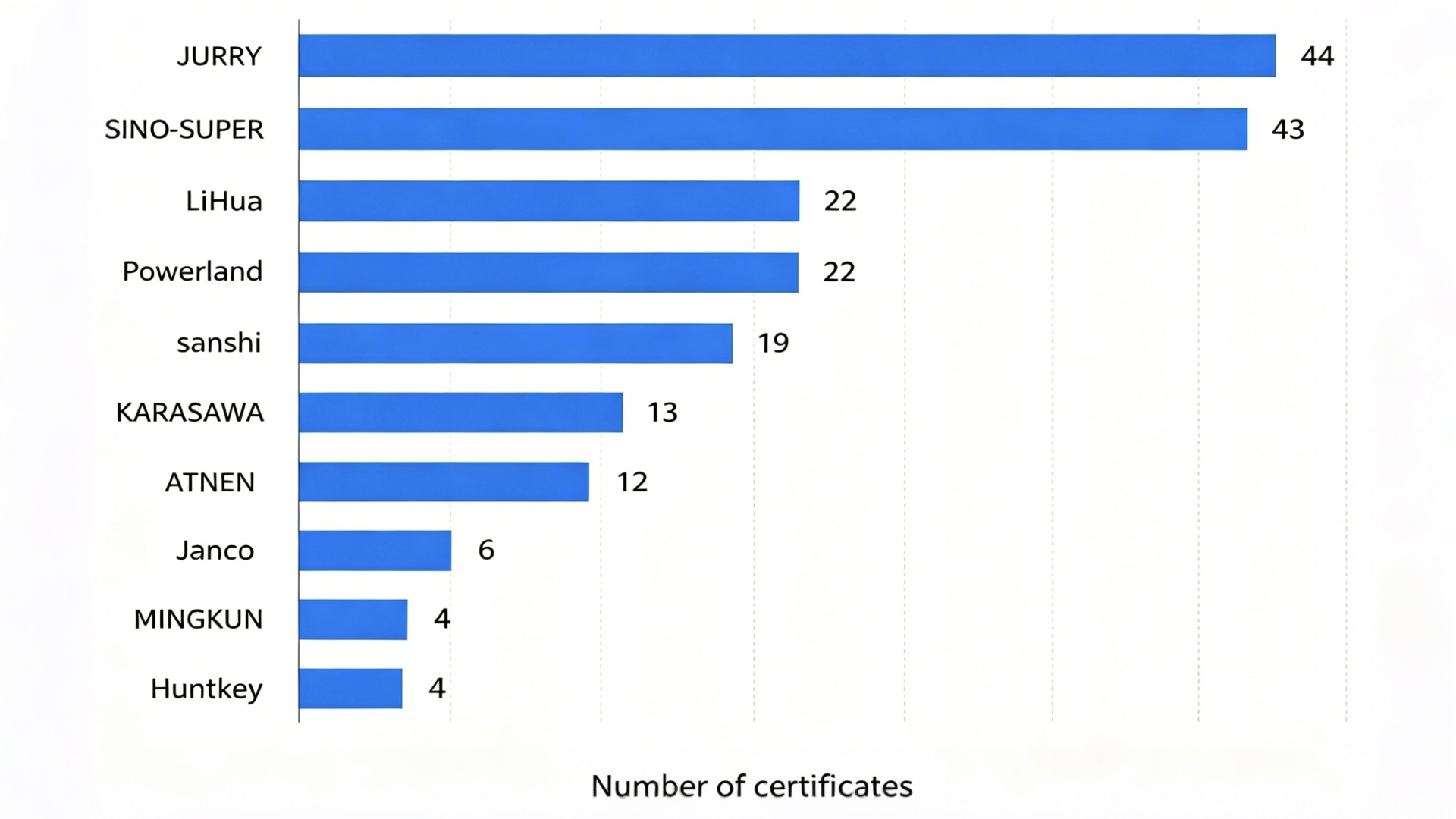
Market leaders are pulling ahead. JURRY and SINO-SUPER currently dominate the scene, holding 37% of the 235 issued certificates. Along with Lihua, Boland, and Sanshi, the top five players control 64% of the certified market. This concentration in power-supply hubs like Jiangsu and Zhejiang proves that manufacturing scale and R&D depth are now the minimum requirements for staying in the game.
The certification data highlights a balanced market: lithium and lead-acid chargers each hold roughly 50% of the share. While lead-acid remains the backbone of the installed base, lithium is the clear growth driver. Meanwhile, sodium-ion chargers have made their debut on the list—a small but significant sign that the industry is already preparing for the next wave of battery tech.
The 48V platform remains the undisputed king, appearing in over 80% of certified products. The 48V 3A (144W) spec is the most common, reflecting a regulatory focus on stabilizing the mainstream slow-charging market before moving to high-speed alternatives. For now, universal safety and compatibility outweigh raw power in the eyes of regulators.
By mid-2024, the first phase of the industry’s compliance journey was complete. As chargers serve as the critical bridge between the grid and the rider, "Safe or Out" is the new reality. Low-quality, uncertified "clones" are being pushed to the sidelines, replaced by a new era of branded reliability and social accountability.

All Comments (0)